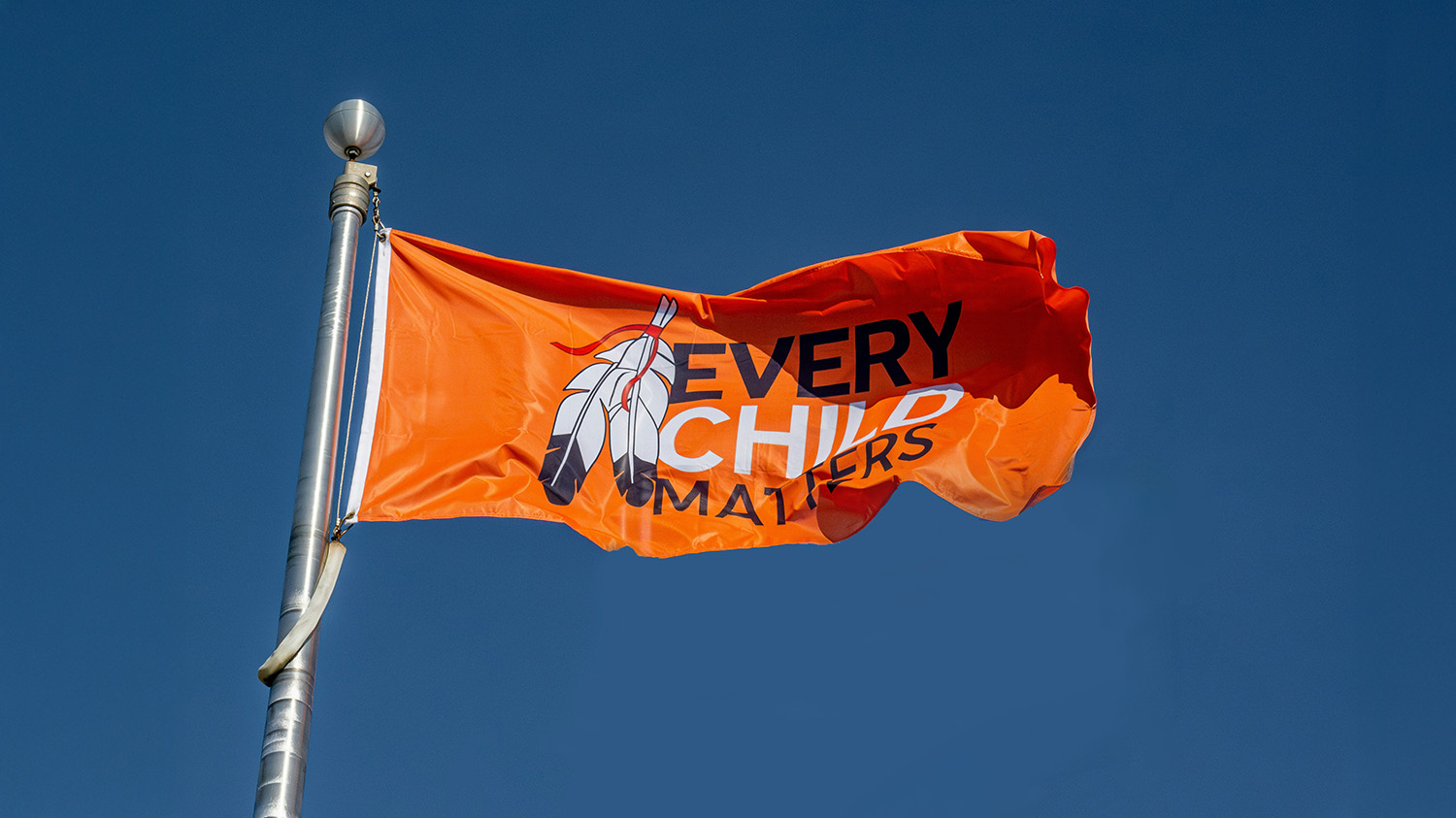
Message from Ombudsman Addo marking the National Day for Truth and Reconciliation
Today, on the National Day for Truth and Reconciliation, we honour Survivors of residential schools, their families and communities, and remember the children who never came home. Also known as Orange Shirt Day, September 30 is an opportunity to recognize the history and ongoing harms of residential schools, and to consider what truth and reconciliation require of us.
Orange Shirt Day was started by Phyllis (Jack) Webstad, a Northern Secwpemc (Shuswap) author and activist from the Stswecem’c Xgat’tem First Nation (Canoe Creek Indian Band) and a Survivor of the St. Joseph Mission Residential School in British Columbia. On her first day at the school, the new orange shirt her grandmother had given her was taken from her and never returned. Her experience has become a powerful reminder of the thousands of children who were forcibly removed from their families and whose identities, languages, cultures and connections to family and community were systematically denied.
More than 150,000 First Nations, Inuit and Métis children were taken from their families and subjected to profound harm through the residential school system. The last residential school closed in 1996. The effects of residential schools and colonization continue to be felt today, including through intergenerational trauma. The history of residential schools reminds us that the violence of colonialism and its impacts continue to reverberate across public systems – notably, for our Housing Unit, with respect to the continued displacement of Indigenous Peoples from their homes and the over-representation of Indigenous Peoples in housing precarity and homelessness.
At Ombudsman Toronto, this history is not separate from our work. Our office operates within public institutions shaped by colonial structures and assumptions. We have the responsibility to understand how the systems we work within have affected Indigenous Peoples, and to examine how our own practices may contribute to barriers or inequities for individuals or groups seeking our services.
The Truth and Reconciliation Commission’s Call to Action 57 calls on governments to educate public servants on the Indigenous histories, rights, laws, Treaties and Indigenous-Crown relations. Reconciliation requires us to bring that understanding into how we work, the relationships we build and the way we engage with Indigenous Peoples, knowledge and perspectives. At the end of June, our team marked National Indigenous Peoples Day at Biidaasige Park reflecting on Indigenous relationships to land and what it means to embody reconciliation in our ongoing work.
With an Indigenous facilitator, we are co-creating a dedicated approach to building and strengthening our relationships with Indigenous Peoples, while respecting Indigenous sovereignty, self-determination and self-governance. Our goal is that Indigenous Peoples know about our office, feel safe contacting us and trust that they will be heard and treated with respect when they do.
We know we have more work to do. As an accountability office, we must also hold ourselves accountable. We will continue to learn/unlearn, examine our practices with humility, listen to Indigenous Peoples and change how we work in a good way.