Addressing an urgent accessibility concern
What happened
Dennis, a long-time resident of a Toronto Community Housing Corporation (TCHC) building, lives with quadriplegia and relies on 24-hour attendant care. He contacted us after the building’s accessible entrance became unusable.
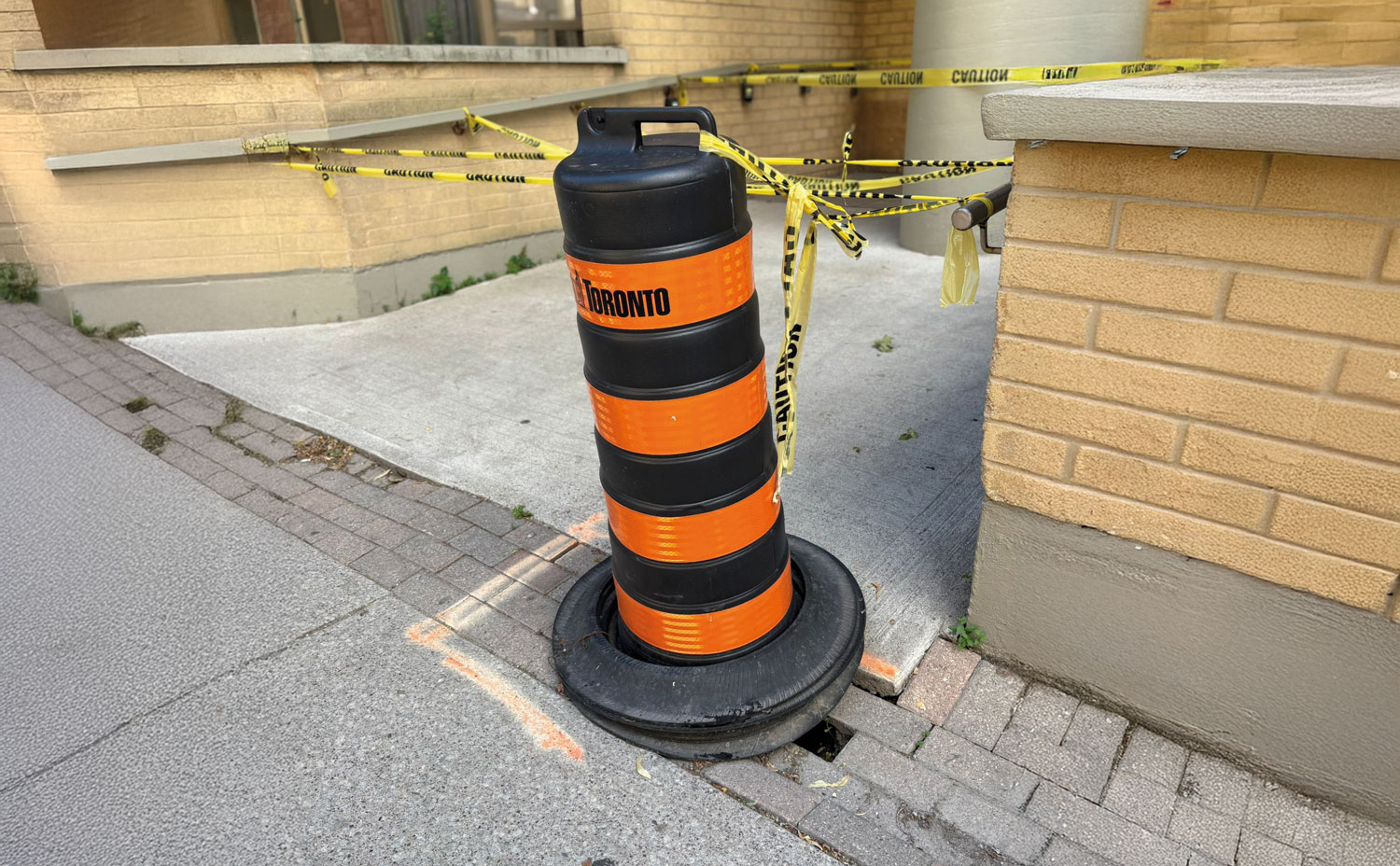
City staff had taped off the area for weeks after nearby water infrastructure repairs had damaged the entranceway, leaving a hole where it met the sidewalk. City staff hadn’t provided tenants with a timeline for repairs.
At least two dozen residents who use wheelchairs or mobility devices had to use a rear entrance that was narrower and exited into an alley without a sidewalk, creating safety risks. Dennis was concerned that the dispute about who was responsible for the repairs was impeding a resolution to tenants’ accessibility requirements.
What we did
We contacted both TCHC and Transportation Services to press for immediate repair, especially given the accessibility needs of tenants. We also worked with Municipal Licensing and Standards (MLS) and 311 Toronto to remind them of the importance of prioritizing issues that could create or worsen barriers to equitable access. We stressed to all divisions the urgency of the repair and significant accessibility concerns.
The result
After our involvement, TCHC repaired the area in under a week. Building management issued a notice apologizing for the disruption.
Why this matters
Public services are only truly fair when they are accessible. Residents, especially those who use mobility supports, should be able to safely enter and exit their homes without unnecessary risk or delay. When infrastructure problems arise, City staff should act quickly, work together and communicate clearly so residents know what is being done and when.